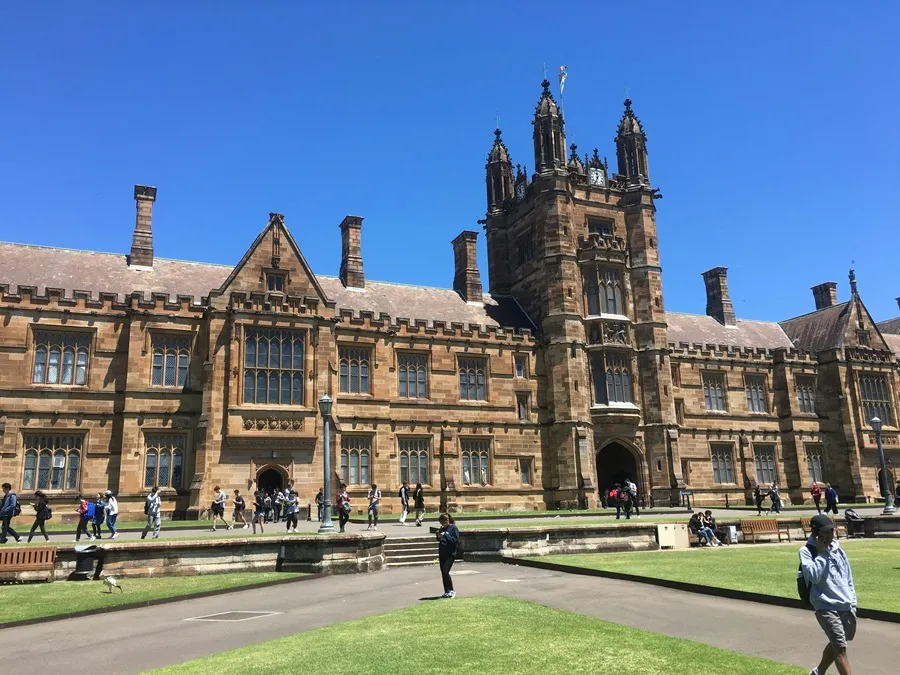
Australia remains one of the premier global higher education destinations, hosting hundreds of thousands of international students across its world-class institutions. However, recent updates to student visa regulations and rising cost-of-living indices across major Australian metropolitan hubs require careful financial planning.
This guide breaks down every expense you will encounter when studying in Australia in 2026 — from tuition rates and mandatory Overseas Student Health Cover (OSHC) to the official AUD $29,710 Subclass 500 visa proof of funds requirement.
1. Annual tuition costs by qualification level
Tuition fees vary significantly based on your level of study, your chosen field, and whether you attend a major Group of Eight (Go8) research university or a smaller regional institution.
| Qualification level | Average annual tuition (AUD) | Key considerations |
|---|---|---|
| Vocational Education & Training (VET) | $4,000 – $22,000 | Practical, career-oriented diploma and certificate courses. |
| Undergraduate (Bachelor's) | $20,000 – $45,000 | Humanities trend lower; STEM, CS, and Business trend higher. |
| Postgraduate (Master's — coursework) | $22,000 – $50,000 | Professional degrees (e.g. MBA) can reach AUD $60,000+. |
| Doctoral (PhD) | $20,000 – $42,000 | Often heavily supported by Australian Government Research Training Program (RTP) stipends. |
Field of study cost gaps
- High-cost disciplines: Medicine, Dentistry, Veterinary Science, and Executive MBAs often range from AUD $60,000 to $95,000+ per year.
- Moderate-cost disciplines: Engineering, Information Technology, Data Science, and Architecture.
- Lower-cost disciplines: Arts, Humanities, Social Work, and Education.
2. Australian Student Visa (Subclass 500) proof of funds requirement
To secure an Australian Student Visa (Subclass 500) in 2026, applicants must present verifiable financial capacity showing they can cover travel, tuition, and living expenses for their first 12 months.
Mandatory financial benchmarks for 2026
Primary applicant living costs
AUD $29,710
Spouse / de facto partner
+ AUD $10,394
Dependent child (per child)
+ AUD $4,449
Travel allowance
~AUD $2,000 – $3,000
Total visa proof of funds (single applicant)
AUD $29,710 (living expenses) + 1st year tuition + AUD $2,000 (travel)
Important evidence standard
The Department of Home Affairs expects liquid, accessible funds — traceable 3–6 month bank statements, government-backed education loans, or scholarship letters. Sudden unexplainable cash deposits made immediately before filing risk application refusal.
3. Mandatory Overseas Student Health Cover (OSHC)
International students on a Subclass 500 visa are required by law to maintain continuous Overseas Student Health Cover (OSHC) for the entire duration of their stay.
- Average annual premium (single cover): AUD $620 – $950 per year.
- Approved providers: Medibank, Allianz Care, Bupa, ahm, nib, and CBHS International Health.
- What it covers: GP visits, public hospital treatments, emergency ambulance services, and limited prescription pharmaceuticals.
4. Monthly cost of living breakdown by city
Living costs vary considerably between Australia's tier-1 coastal capitals (Sydney, Melbourne) and mid-sized or regional cities (Adelaide, Perth, Brisbane).
| Expense category | Tier 1 Sydney & Melbourne | Tier 2 Brisbane & Perth | Tier 3 Adelaide & Regional |
|---|---|---|---|
| Shared accommodation / rental | $800 – $1,600 | $650 – $1,200 | $500 – $900 |
| Groceries & food | $300 – $450 | $280 – $400 | $250 – $360 |
| Public transport (student concessions) | $120 – $220 | $100 – $180 | $80 – $140 |
| Utilities, mobile & internet | $120 – $200 | $100 – $180 | $90 – $150 |
| Personal & entertainment | $150 – $300 | $120 – $250 | $100 – $200 |
| Estimated monthly total | $1,490 – $2,770 | $1,250 – $2,210 | $1,020 – $1,750 |
5. Part-time work rules & income potential
To offset day-to-day costs, international students in Australia have work permissions under Subclass 500 conditions:
- Working hour limits: up to 48 hours per fortnight while your course is in session, and unlimited hours during official scheduled university breaks.
- Research degrees: Masters by Research and PhD candidates have unlimited work rights once their course commences.
- Minimum wage guarantee: Australia maintains a statutory national minimum wage (currently over AUD $24.10 per hour plus casual loadings where applicable), providing predictable earning opportunities in retail, hospitality, tutoring, and administration.
Key takeaway
A realistic annual budget for a single international student in Australia ranges from AUD $48,000 to $75,000+ per year when combining undergraduate or postgraduate tuition, mandatory OSHC, and living expenses. Planning your visa proof of funds well ahead of your application date is essential.